A breakdown is never convenient, but where it happens shapes how stressful it becomes. A stalled car on a quiet residential lane is a very different problem from one stuck at a jammed junction or on an expressway on-ramp. After enough call-outs across the Colombo district, clear patterns emerge — certain roads, certain areas, and certain conditions produce far more breakdowns than others. This guide walks through the areas we cover, what tends to strand drivers in each, and how quickly help can reach you. If you drive around Colombo regularly, it’s worth knowing before you need it.
The city core and coastal south
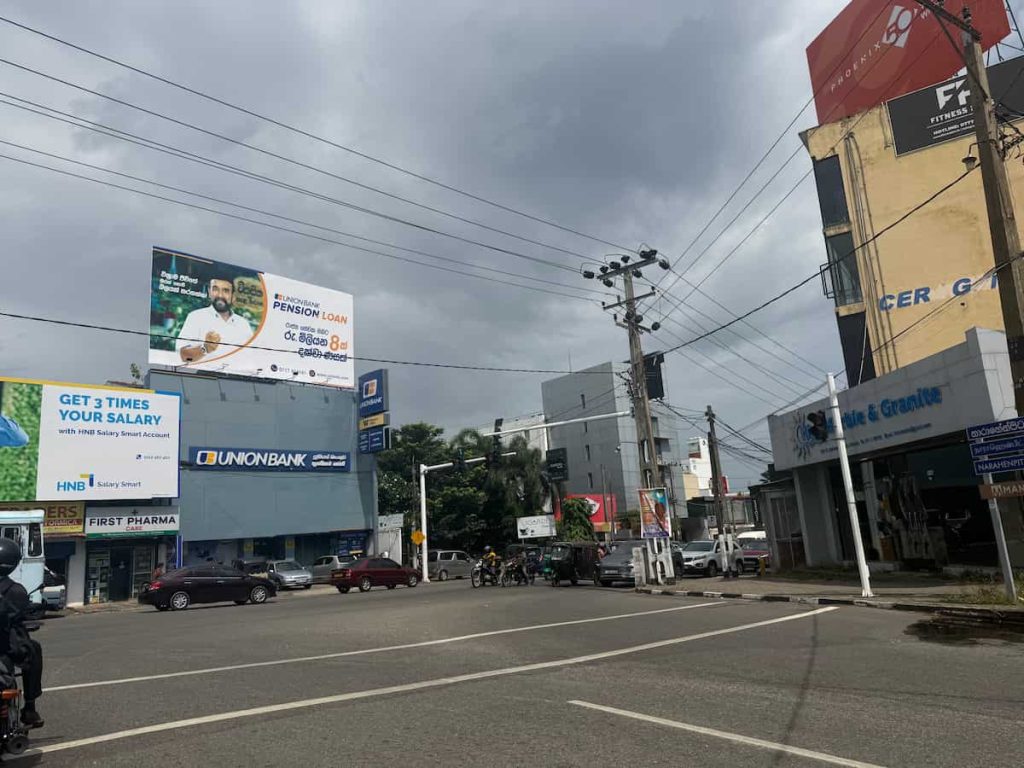
Central Colombo generates the most calls simply because it carries the most traffic. The relentless stop-start crawl along Galle Road, Duplication Road and the Baseline Road is punishing on batteries and clutches, and the afternoon heat pushes cooling systems hard. A vehicle that stops here blocks a lane within seconds, so speed matters more than anywhere — reaching you, making the vehicle visible, and clearing it fast.
Heading south along the coast, Dehiwala and Mount Lavinia share a distinctive problem: salt. The sea air that makes the coast pleasant quietly corrodes battery terminals and electrical connections, so starting trouble is more common here than inland — often a car that has sat unused for a few days and simply won’t turn over. Dehiwala’s stretch of Galle Road is one of the busiest in the region, so a breakdown there needs clearing quickly; Mount Lavinia mixes that busy through-traffic with quieter beachside lanes where a location pin helps us find you fast.
The inner-east suburbs
The band of suburbs east of the city — Nugegoda, Rajagiriya and Kotte — are defined by heavy commuter traffic. Nugegoda’s junction is one of the most consistently congested points in the whole commuter belt, and High Level Road feeds it a constant flow of buses, cars and three-wheelers. That stop-start driving wears batteries and clutches faster than anything, which is why those top the call list here.
Rajagiriya sits on the busy approach to the administrative capital, with the bridge and the Cotta Road corridor backing up at peak times. Kotte itself — the seat of Parliament — sees a daily surge of office traffic on its approach roads, with quieter, faster roads around the Diyawanna lake. Each of these areas has its own rhythm, and knowing which approach is moving is a large part of how we reach you quickly through the congestion.
The eastern corridor: Malabe, Battaramulla and beyond
The eastern corridor has grown fast, and its traffic has grown with it. Malabe has become a hub for technology companies and universities, drawing heavy commuter volume onto its junction and the Kaduwela road — and its rapid development means rough road edges that take a toll on tyres. Battaramulla, a major administrative and commercial centre, sees the same peak-hour crawl on its junction and the Kaduwela road.
Further out, Athurugiriya has grown around its Southern Expressway interchange, which adds a particular kind of call: faults that surface right at the transition onto or off the expressway — a warning light before joining, an overheating gauge after a fast run. Breaking down on or near an interchange is more exposed than an ordinary road, so those calls get priority and the fastest safe approach.
The High Level Road corridor
Running south-east out of the city, the High Level Road strings together some of our busiest suburban areas. Maharagama is one of the busiest commercial hubs on the road, with a junction and market area that stay congested through the day. Pannipitiya sits between Maharagama and Kottawa on the same relentless artery, and Kottawa marks where the High Level Road meets the Southern Expressway entrance — so drivers here often discover a fault just as they’re about to join the expressway, or shortly after.
Continue on and the character shifts. Homagama is a growing regional town with its own busy centre and expressway links, while Padukka sits at the semi-rural edge of the district, where garages are further apart and a mobile service that comes to you earns its place — a stranded vehicle out here can be a long way from the nearest workshop.
The south-west: Piliyandala, Kesbewa and Boralesgamuwa
The south-western cluster is built around busy junctions where routes converge. Piliyandala is a hub where roads from Kesbewa, Moratuwa, Kottawa and Colombo meet, so its junction stays congested and a stopped vehicle backs things up quickly. Kesbewa lies on the busy Horana road corridor, carrying a heavy mix of buses, cars and lorries that is hard on batteries and clutches. Boralesgamuwa connects several larger centres, with traffic passing through toward Nugegoda, Dehiwala and Piliyandala — so wherever you stop in the area, one call reaches the nearest crew.
The common thread — and what it means for you
Look across all these areas and a pattern emerges: the same handful of faults dominate everywhere. Heavy stop-start commuting wears batteries and clutches; rough road edges and potholes destroy tyres; coastal air corrodes terminals; and lockouts and empty tanks happen regardless of where you are. Most of these are predictable, and many are preventable with a monthly ten-minute check of your battery, tyres, coolant and fuel habits.
What differs from area to area is not so much the fault as the context — how exposed you are, how fast traffic is moving, how quickly a stopped vehicle becomes a hazard. That’s why local knowledge matters: reaching a stranded driver quickly is partly about knowing which approach to a junction is clear, how the traffic flows at that hour, and the fastest genuine route rather than the shortest line on a map.
Wherever you are in the Colombo district, the response is the same: one number, answered around the clock, with the right equipment for your vehicle and a firm price agreed before anyone sets off. If the fault can be fixed at the roadside — a jump-start, a tyre change, some fuel — we do it on the spot. If the vehicle genuinely can’t be driven, we recover it safely to the garage of your choice. Whatever has stopped you, our breakdown service covers all of these areas and everywhere in between, day or night.
Getting help to you faster, wherever you are
Across every one of these areas, the single biggest thing that speeds up help is a clear location. In a district as dense as Colombo, a street name alone can be ambiguous — there are junctions, landmarks and roads that share names across suburbs. The fastest way to get a crew to your exact spot is a WhatsApp location pin, or naming the nearest well-known landmark, junction or building. On a busy road, get the vehicle as far to the left as you safely can, switch on your hazard lights, and stand clear of traffic rather than beside the car while you wait.
It also helps to describe what happened as precisely as you can when you call. Did the engine cut out suddenly, or did a warning light come on first? Does the car still start? Is there a noise, a smell, or smoke? Do you have a spare tyre and the tools? The clearer the picture, the better we can arrive with exactly the right equipment — and the less likely you are to wait while the wrong vehicle is sent. A dead battery, a shredded tyre and a seized engine are three completely different jobs, and knowing which one you have before we leave saves everyone time.
Broken down right now? Call or WhatsApp 071 350 5087 — we come to you.