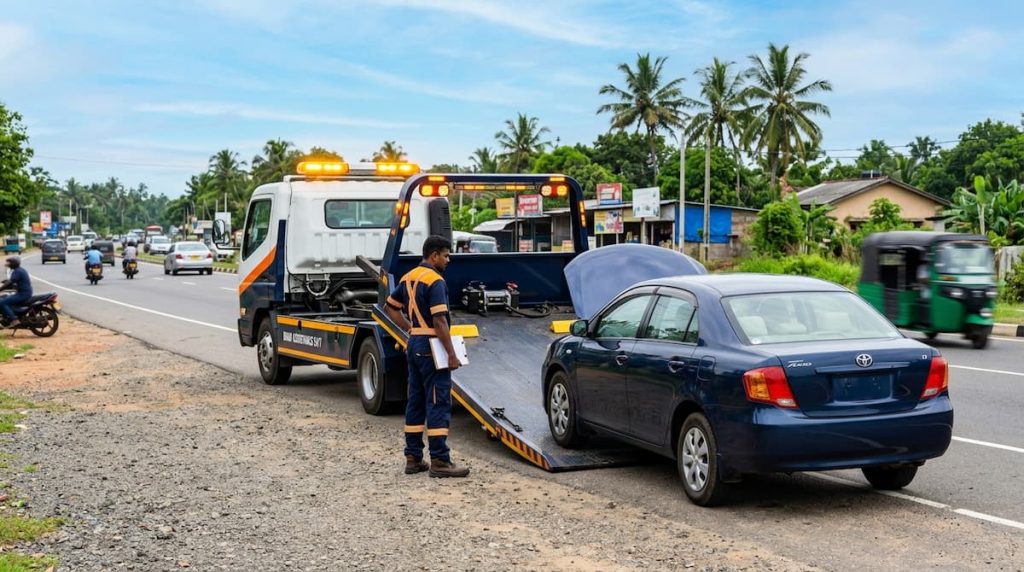
After enough call-outs across Sri Lanka, a clear pattern emerges. The vast majority of breakdowns are not freak mechanical failures — they come down to a short list of predictable problems. The reassuring part is that several of them are avoidable with about ten minutes of attention a month. Here are the six we attend most often, why they happen, and what you can do to stay off the hard shoulder.
1. Flat batteries
The single most common call we get is a car that simply won’t start. In Sri Lanka’s climate, heat is the quiet enemy of a battery — high temperatures shorten its working life far faster than cold does. Add the way most of us drive, in short stop-start trips through heavy traffic, and the battery rarely gets a chance to recharge fully. Over months, its capacity quietly drops until one morning it can’t turn the engine over.
The warning signs are there if you know them: a sluggish crank, dashboard lights that dim when you start, or a battery more than three years old. A quick check of the terminals for corrosion and a load test at any garage will tell you where you stand. When a battery does die on you, a mobile jump start service gets you going again in minutes and can advise whether the battery is worth keeping or due for replacement.
2. Tyre failures
Flat and blown tyres are our second most frequent call, and Sri Lankan roads make them almost inevitable over time. Broken surfaces, potholes that open up after heavy rain, and sharp debris all take a steady toll. The hidden culprit behind many failures is under-inflation — a soft tyre flexes more, overheats, and is far more likely to fail at speed.
Checking your tyre pressures once a month, including the spare, is the cheapest insurance there is. Look for cuts, bulges and worn tread while you’re at it. If you do suffer a flat and have a serviceable spare, flat tyre assistance can fit it at the roadside and get you moving; if the tyre is destroyed and there’s no usable spare, the vehicle may need to be made safe and moved instead.
3. Running out of fuel
It happens more often than people like to admit. Usually it’s a combination of an optimistic glance at the gauge and an unexpected stretch of traffic that burns more than planned. Diesel vehicles can be particularly awkward, as running the tank dry sometimes means the system needs bleeding before it will run again.
The fix is simple habit: refuel at a quarter tank rather than running to empty, especially before a long trip or a drive through an unfamiliar area. If you are caught out, fuel delivery brings enough to get you to the nearest station, so you don’t have to leave your vehicle unattended on the roadside.
4. Overheating
Long spells idling in Colombo traffic put real strain on a cooling system, and overheating is a call we attend regularly, especially in the afternoon heat. A low coolant level, a failing radiator cap, a tired thermostat or a slow leak can each push the temperature gauge into the red. Ignored, overheating can warp a cylinder head — turning a cheap fix into an expensive one.
A monthly look at the coolant reservoir catches most problems before they strand you. If the gauge does climb, pull over safely, switch off, and let the engine cool before checking anything — never open a hot radiator cap. If the vehicle can’t safely continue, a recovery service is the sensible call rather than risking further damage by driving on.
5. Clutch and gearbox faults
Mechanical transmission trouble tends to announce itself well before it leaves you stranded. A clutch that slips, bites very high, or smells hot under load is telling you something. A gearbox that grinds or is reluctant to select gears is doing the same. These are easy warnings to ignore because the car still moves — right up until it doesn’t.
The lesson here is to act on the early signs rather than waiting for a total failure, which almost always happens at the worst possible moment. When a clutch or gearbox does fail completely, the vehicle usually can’t be driven and needs a tow truck to move it to a workshop.
6. Lockouts
Our sixth most common call isn’t mechanical at all. Keys locked inside the car, or a key fob that has died, account for a surprising share of the help people need. It’s frustrating precisely because nothing is actually wrong with the vehicle.
Keeping a spare key somewhere accessible — with a trusted family member, not inside the car — prevents most lockouts entirely. If you are shut out, a vehicle lockout service can open most vehicles safely without damaging the door or lock.
The common thread
Look at the list and a pattern jumps out: most of these are preventable, or at least predictable. A monthly ten-minute check of your battery, tyres, coolant and fuel habits would head off the majority of the calls we attend. Breakdowns rarely come out of nowhere — they build quietly until something gives.
Of course, no amount of maintenance eliminates every risk, which is why it helps to know who to call before you need them. Whatever has stopped you, our breakdown service covers all of these situations around the clock, anywhere in Sri Lanka — and if you’re not sure whether you need a repair or a recovery, our roadside assistance team will work that out with you on the phone before anyone sets off.